Guided vs DIY Stargazing: What a Guide Actually Adds
Utah's dark skies are free to anyone willing to drive into them. So why pay for a guide? Because the sky being visible and you knowing what you're looking at are two very different things. Here's the honest case for both sides.
The Gap Nobody Warns You About
Here's what happens to most first-time visitors at a place like Bryce Canyon: they walk out to a rim viewpoint, look up, and are genuinely stunned — for about ten minutes. Then a quieter feeling sets in. They're looking at roughly 7,500 stars and can identify almost none of them. They can't find the Andromeda Galaxy even though it's naked-eye visible. They don't know that the fuzzy patch in Sagittarius is the center of our galaxy. The sky is magnificent and completely illegible.
That's the gap a guide closes. The question is whether it's worth closing on your trip. For most people seeing a true dark sky for the first time, the answer is clearly yes — and for a specific kind of traveler, the answer is honestly no. Both cases below.
What a Guided Tour Adds
1. Telescopes most people will never otherwise look through
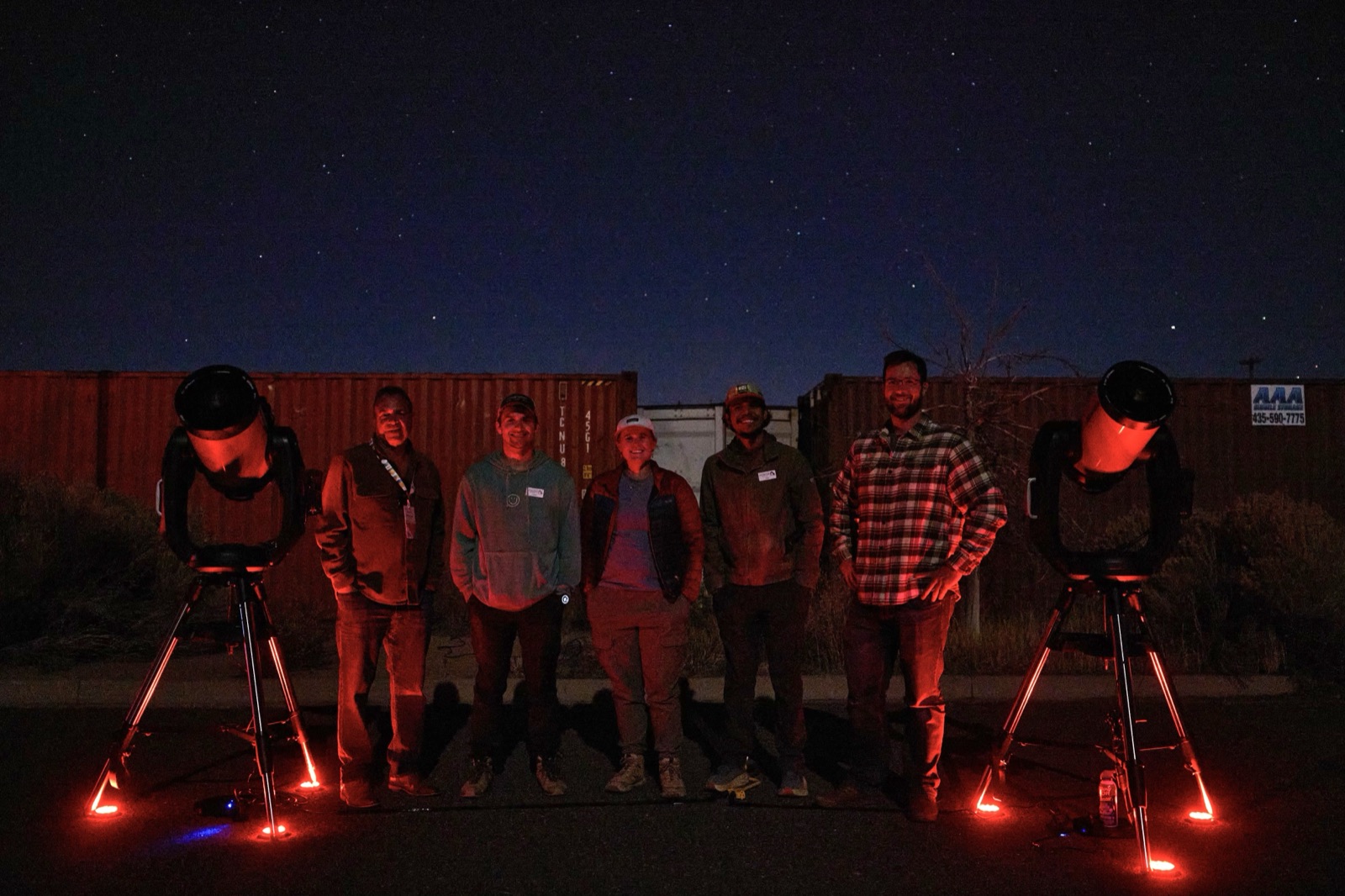
This is the biggest single difference, and it's not close. The overwhelming majority of visitors — including lifelong campers and hikers — have never looked through a serious, large-aperture telescope. Department-store telescopes show Saturn as a bright dot with bumps. A professional instrument under a Bortle 2 sky shows the Cassini Division in Saturn's rings, the cloud bands of Jupiter and its four Galilean moons, the resolved stars of a globular cluster, and galaxies as structured objects rather than smudges. You cannot replicate this with binoculars or a phone app, and renting or hauling such an instrument yourself is impractical for a vacation.
2. Laser-guided constellation tours
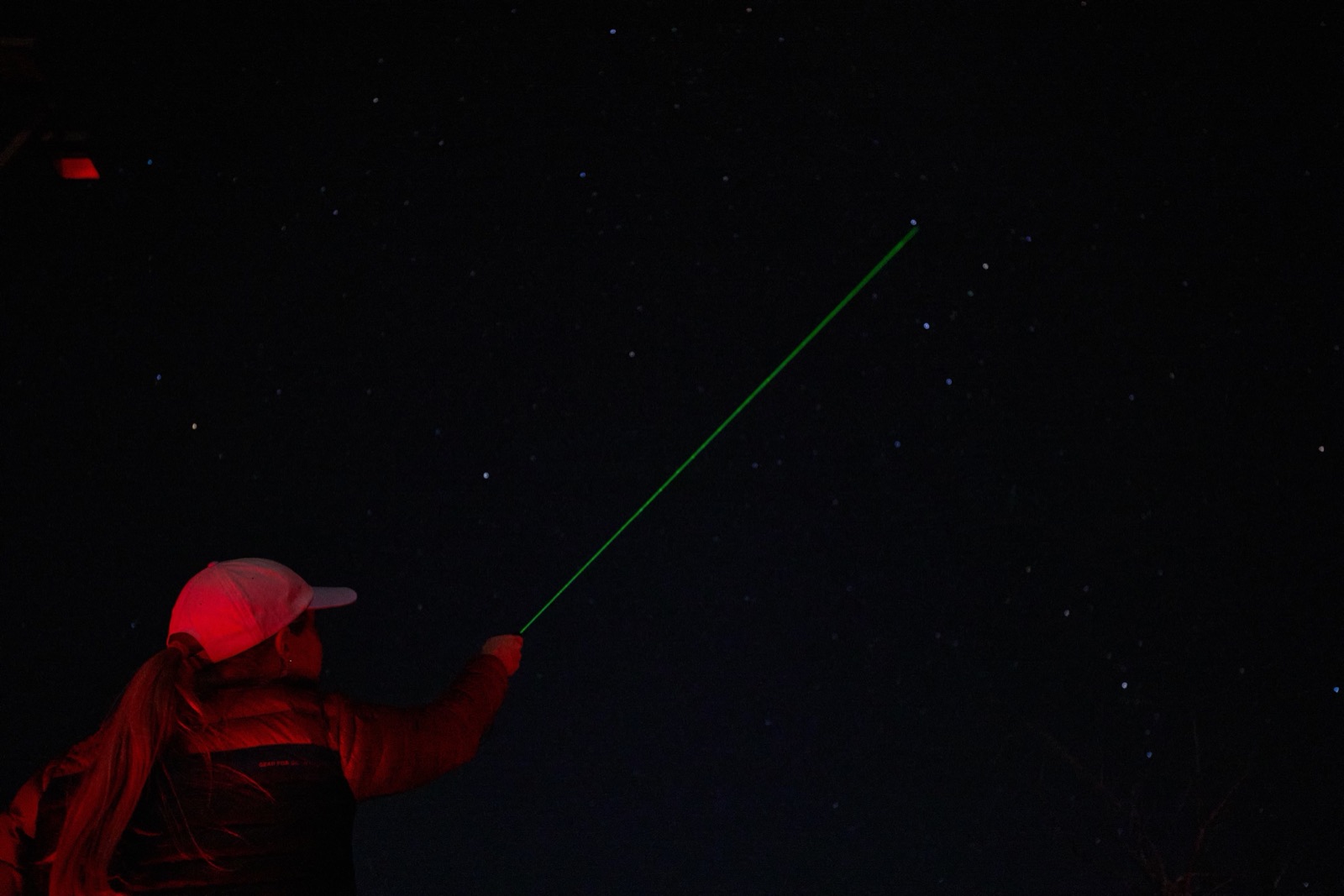
A guide with an astronomy-grade laser pointer can trace constellations directly on the sky, so thirty people see exactly the same star at the same moment. In fifteen minutes, an unreadable wall of stars becomes a structured map: the summer triangle, the teapot of Sagittarius pouring out the Milky Way's core, the slow march of planets along the ecliptic. This is the fastest known way to learn the night sky, and it only works with someone who already knows it.
3. Dark-adapted logistics and navigation
The unglamorous part DIY stargazers underestimate most. Real dark-sky observing means: finding a safe, legal viewpoint at night; managing 30–40°F temperature drops at 8,000+ feet, even in July; protecting your night vision (one glance at a white phone screen costs you 20–30 minutes of dark adaptation); and knowing where the terrain drops away — at Bryce, the rim is a several-hundred-foot cliff in the dark. A guide has solved all of this hundreds of times. You get to just look up.
4. Interpretation that turns viewing into memory
The difference between "the stars were amazing" and a night your kids talk about for twenty years is interpretation: what you're seeing, how far away it is, why it matters, told at the moment you're looking at it. Light that left a galaxy two and a half million years ago landing in your eye is a fact; a good guide makes it land emotionally. That's the actual product.
When DIY Is Genuinely Fine
We'd rather be straight with you than upsell you. Skip the tour if:
- You already know the sky. If you can star-hop to M13 and own decent optics, Utah is your playground — go to Capitol Reef or Goblin Valley from our rankings and enjoy the solitude.
- You only want the naked-eye Milky Way moment. Seeing the galactic core for the first time requires no equipment and no guide — just a moonless night in core season (May–September) and twenty minutes of dark adaptation.
- You're an astrophotographer. Tours run on a group schedule; your camera runs on the sky's. Scout your foreground by day and work alone.
- The moon is full. No guide can fix a washed-out sky. Plan around the new moon — our trip planning guide shows how — or enjoy a moonlit hike instead.
Side by Side
| Factor | Guided Tour | DIY |
|---|---|---|
| Telescope views | Large-aperture instruments, expertly aimed | Whatever you can carry |
| Learning the sky | Laser tour, structured in one evening | Apps help, but slow |
| Safety and siting | Handled — legal, safe, truly dark spot | Your research, your risk |
| Flexibility | Fixed schedule and meeting point | Total — stay until 3 a.m. |
| Cost | Tour fee per person | Free beyond park entry |
| Best for | First-timers, families, anyone without gear | Experienced observers, photographers |
See What a Real Telescope Shows You
Bryce Canyon Stargazing pairs certified Bortle 2 skies with professional telescopes and laser-guided sky tours — the full guided experience described above.
Book a Guided Tour at BryceOur Recommendation
If this is your first real dark sky — and statistically, it almost certainly is — take the guided tour, and take it at Bryce Canyon. It's the one Utah park that combines a top-tier certified sky with a professional operator at its doorstep, and our park rankings explain why that combination matters more than a tenth of a magnitude of extra darkness. Check the FAQ if you're wondering what to bring or whether kids will enjoy it. Then book the darkest night of your year with Bryce Canyon Stargazing.