The Two Rules That Beat Every Month

Before the calendar: two factors matter more than which month you pick. First, the moon. A full moon erases the Milky Way from even a Bortle 1 sky, so aim within roughly a week of the new moon — our trip planning guide walks through exactly how. Second, weather patterns: southern Utah's monsoon (mid-July through early September) brings afternoon thunderstorms that usually, but not always, clear by night. Everything below assumes you've handled the moon.
January
Winter clarity
The coldest nights of the year are also the clearest: low humidity, stable air, and the Quadrantid meteor shower in the first week — brief but intense in the right hour. Orion, the Pleiades, and Sirius dominate. At Bryce Canyon, snow on the hoodoos under starlight is a sight most visitors never know exists. Dress for temperatures well below zero.
February
Quietest month
Similar skies to January with even fewer people. The winter Milky Way — fainter than the summer core but laced through Orion and Gemini — arcs high overhead. Excellent month for telescope targets: the Orion Nebula is at its best, and guided winter tours are easy to book.
March
Core returns (pre-dawn)
The galactic core makes its first appearance of the year, rising in the southeast a couple of hours before dawn. For most visitors this is academic; for astrophotographers it's the starting gun. Evening skies are still winter's — crisp and steady. Weather turns changeable as spring storms move through.
April
Shoulder season
The Lyrid meteor shower peaks around April 22, and the core rises before midnight by month's end. Daytime temperatures become pleasant for combining hiking with night sessions. Watch for late snow at high-elevation sites — Cedar Breaks typically remains closed.
May
Milky Way season opens
The first true core-season month: the galactic center clears the horizon at a civilized late-evening hour. Nights are still cold at 8,000 feet but no longer brutal. May's new moon is one of the best-value windows of the year — full Milky Way, pre-summer crowds.
June
Astronomy Festival
The headline month. Bryce Canyon's Annual Astronomy Festival — four nights of telescope fields, speakers, and constellation tours timed near the new moon — anchors the best astronomy event calendar of any national park. The core is up most of the night, skies are typically dry before the monsoon, and every guided tour and hotel room within 30 miles books out. Reserve months ahead.
July
Core at its highest
The Milky Way core stands at its highest and brightest in the evening sky. The monsoon begins mid-month: dramatic afternoon storms, then frequently crystal-clear, dust-washed nights. Warmest overnight temperatures of the year — which at Bryce still means a jacket.
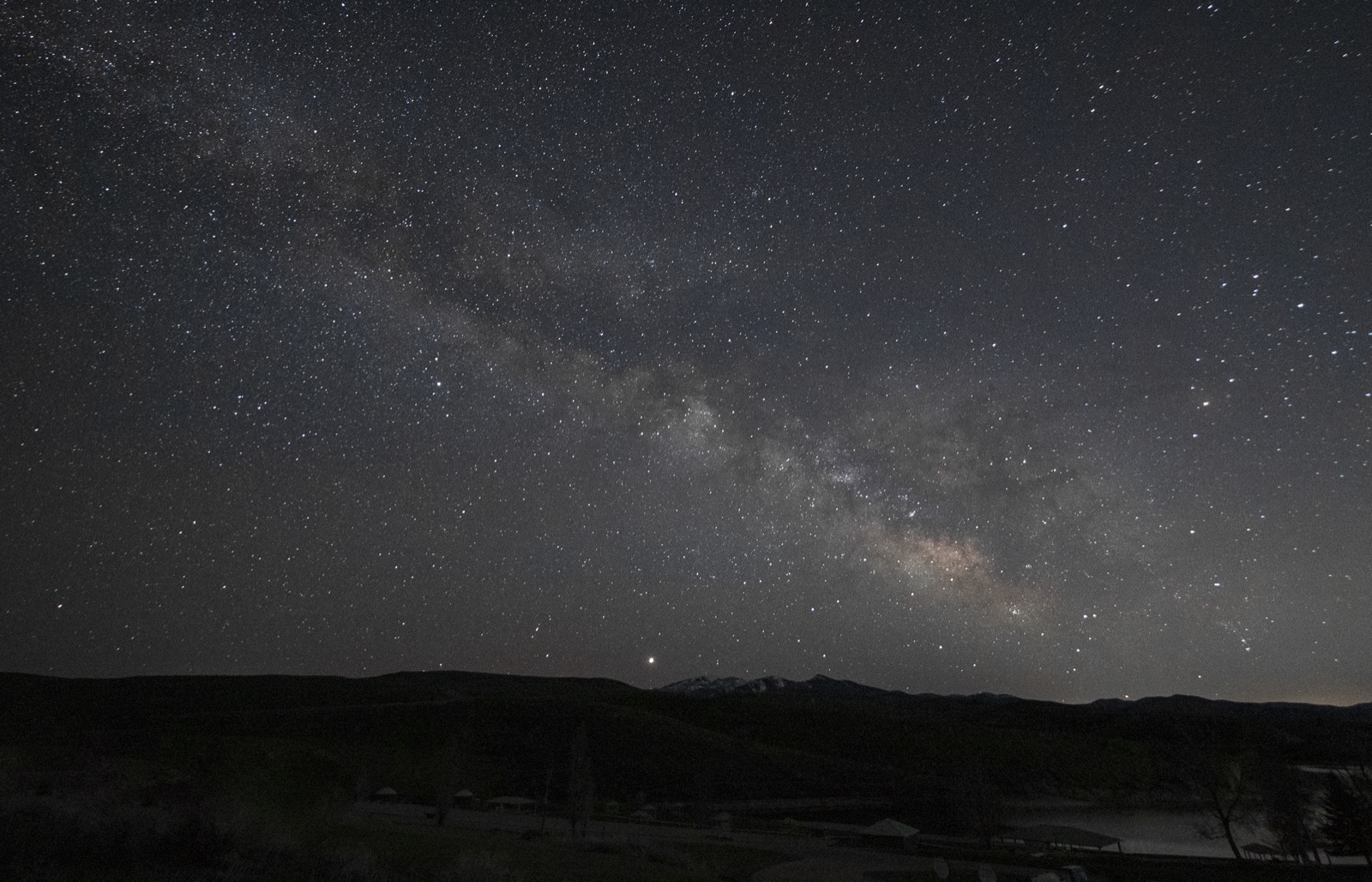
The summer Milky Way arching over Utah mountains during core season
Summer Milky Way over the Paunsaugunt Plateau, Utah 37.5930° N, 112.1871° W · Bortle 2 · Core season May–Sep
August
Perseids
The Perseid meteor shower peaks around August 12–13, delivering up to 60–100 meteors per hour under dark skies — and Utah's certified parks are among the best places on Earth to watch it. In good years the shower coincides with a dark moon and the still-bright core for the year's single most spectacular night. Book guided tours for Perseids week as far ahead as you can.
September
Core season finale
The monsoon fades, nights lengthen, and the core is still well-placed in the early evening — many guides quietly consider September the best all-around month: stable air, comfortable days, thinning crowds, and the Milky Way right after dusk. The core sets earlier each week, so go early in the month if the galaxy is your priority.
October
Transition
The core exits the evening sky, replaced by the Andromeda Galaxy riding high — naked-eye visible from any park in our rankings. The Orionid shower peaks around October 21. Cold returns to the high plateaus; so does the solitude.
November
Deep quiet
The Leonids peak mid-month, modest in most years. Winter constellations rise by mid-evening, air steadies, and parks empty out. A dark-moon November night at Bryce can feel like having a certified dark sky entirely to yourself — because you nearly do.
December
Geminids
The Geminid meteor shower, peaking around December 13–14, is the year's strongest — up to 120 meteors per hour, slow and bright, starting conveniently in mid-evening. Pair it with winter's maximum transparency and you have one of the great underrated nights of the astronomical year. The price is cold that demands real preparation; a guided tour that handles logistics earns its keep most in December.

Picked Your Month? Lock In the Night.

Bryce Canyon Stargazing runs guided telescope tours year-round — Milky Way season, Perseids, Geminids, and the silent winter sky. New-moon weeks sell out first.

Check Tour Dates

Quick Verdicts

Goal Best window
Best overall month June (festival) or September (stability)
Best single night Perseids (Aug 12–13) or Geminids (Dec 13–14)
Most underrated January–February — clearest air, empty rims
First-timers Any new-moon week May–Sep, on a guided tour

Once you've chosen your window, the trip planning guide covers moon phases, where to stay, and how to combine parks — and the FAQ answers everything else.